




Daily Routine Visual Communication Cards
₹1,799
₹2,800
35% OffFinal Price inclusive of all taxes
Cash on Delivery
Free Delivery
Get it delivered in 3-6 days
size
8.5*11 cm
Product Information
Brand
Speechmart
Ideal For
Kids, Toddlers, Children With Autism, ADHD, Speech Delay, Speech Therapy Patients, Special Needs Students, Early Learners, Preschoolers, Middle Schoolers
Material
Premium Thick Paper, Waterproof Pouch Laminated
Country of Origin
India
Pack of
216
Product Type
Flash Card
Product Description
For children navigating Autism Spectrum Disorder (ASD), ADHD, sensory processing variations, or executive functioning deficits, abstract transitions and vague behavioral rules ("be good," "hurry up") can trigger intense anxiety and non-compliance. Neurodivergent learners thrive on visual predictability. When a child can see exactly what is expected of them throughout the day and contrast safe choices against unsafe actions, executive dysfunction dissolves, emotional self-regulation skyrockets, and behavioral meltdowns drastically decrease.
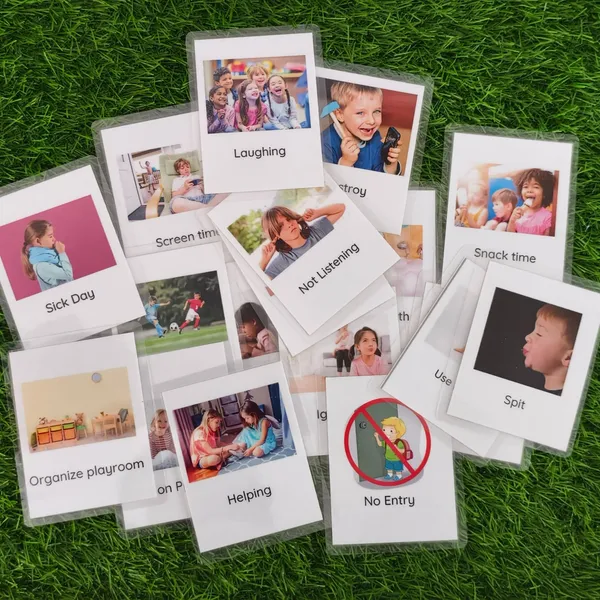
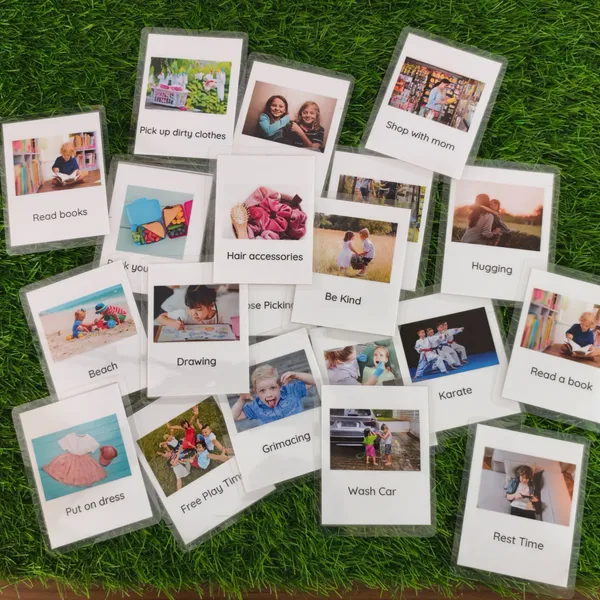
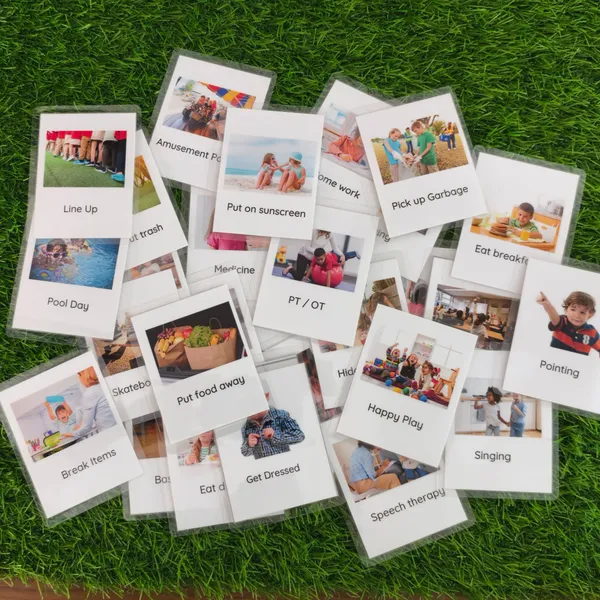
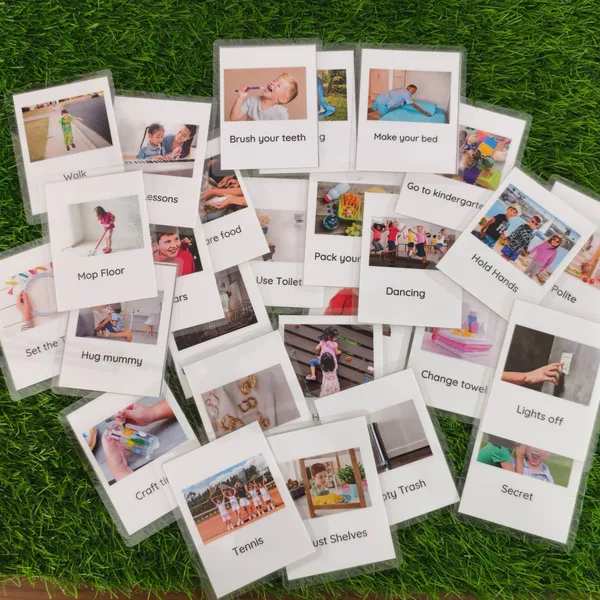
The Behavior & Routine Master Tracker is a professional-grade, multi-modal behavioral modification system. Featuring an unprecedented library of 200 high-utility flashcards paired with structured display boards, this system transitions a child from parental dependence to absolute routine autonomy. By visualising time blocks, modeling social safety boundaries, and explicitly mapping behavioral choices, this kit provides a plug-and-play framework to restructure environments for success.
The 200-Card Comprehensive Behavioral Architecture:
This kit replaces scattered charts and loose checklists by consolidating your entire adaptive behavior and daily living skill (ADL) goals into four beautifully indexed, heavy-duty visual domains:
1. Chronological Daily Routines (Day to Night)
Chronological task scaffolding to guide the child independently through critical household checkpoints.
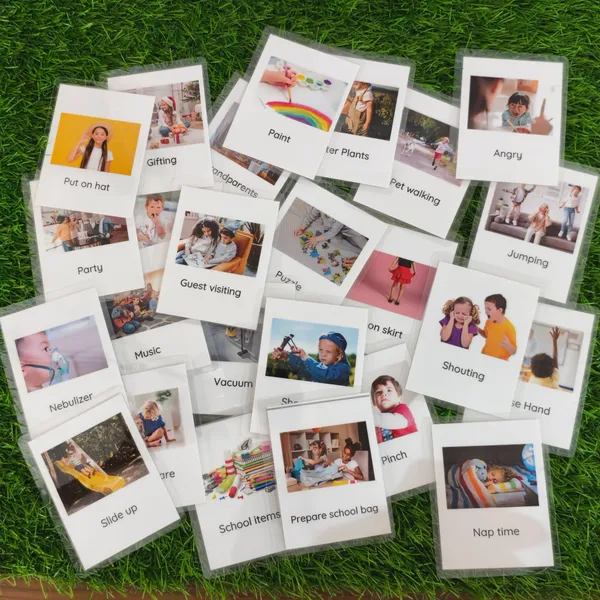
• Morning Routines: Waking up, using the toilet, brushing teeth, washing face, getting dressed, and eating breakfast.
• Afternoon & Evening Routines: Coming home from school, homework time, washing hands, eating snacks, tidy-up play sessions, and dinner etiquette.
• Night Routines: Changing into pajamas, bathing/showering, packing the school bag, reading, and transition to sleep.
2. Institutional & Environmental Adaptability
Preparing the child’s behavioral system for specific external public and structured learning zones.
• The School Module: Sitting at the desk, listening to the teacher, raising a hand to speak, waiting in a line, cafeteria boundaries, and bathroom requests.
• The Peer Play Module: Sharing toys, waiting for a turn, keeping hands to oneself, joining group play, and managing competitive frustration calmly.
3. The Do's & Don'ts / Behavioral Modification Matrix
A powerful, low-arousal concrete comparative system that contrasts target behaviors with clear boundaries.
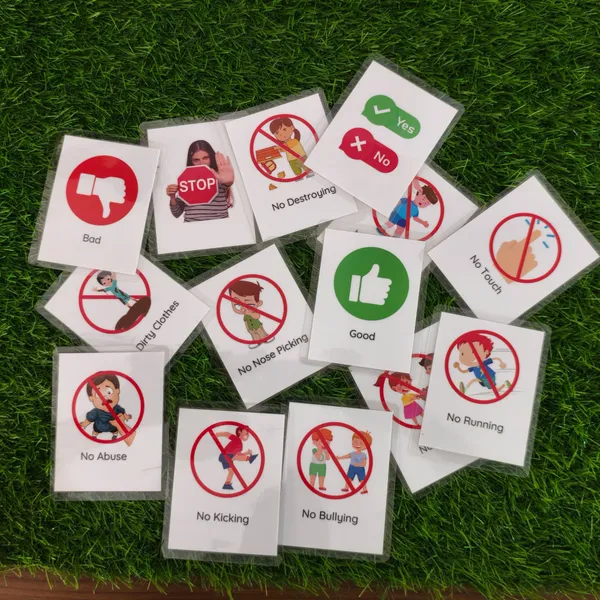
• Good vs. Bad Behaviors: Visually isolating appropriate social actions (e.g., using a quiet inside voice, putting toys away, using polite words) against problematic impulses (e.g., shouting, throwing objects, pushing).
• Proactive Replacement Behaviors: Explicitly teaching the child what to do instead when they face sensory or emotional overwhelm.
How the Display Board Interaction Mechanics Work:
This kit doesn't just give you loose cards—it provides the physical tools to run explicit daily scheduling and active behavioral counseling sessions:
• The Visual Schedule Track: Parents and therapists can arrange the routine cards sequentially on the premium presentation display boards to create an unshakeable morning or evening roadmap. The child moves or turns cards as tasks are completed, building a profound sense of executive control and achievement.
• The Behavioral Contingency Layout: Use the display boards live during behavioral reflection sessions to map out comparative scenes. By placing a "Don't" card (e.g., Screaming) next to a "Do" card (e.g., Asking for a Break), you give the child a non-punitive, highly visual framework to master emotional self-monitoring.
Why Behavior Therapists (BCBAs), Special Educators, & SLPs Invest in This Kit:
• Perfect for Functional Behavior Assessments (FBA) & BIPs: Directly supports standard Individualized Education Program (IEP) goals targeting adaptive behavior, functional communication training (FCT), reduction of non-compliance, and independence in daily living tasks.
• An Instant, Zero-Prep Visual Library: Eliminates the exhausting clinical chore of printing icon grids, cutting paper tabs, or drawing makeshift behavior charts. Your entire visual scheduling and token-ready boundary curriculum is ready to deploy right out of the box.
• Optimal Focus Presentation Format: Crisp, high-contrast, distraction-free illustrations allow neurodivergent learners to rapidly process situational expectations without experiencing sensory or visual clutter.
Why Parents Love It:
• Ends Bedtime & Morning Chaos Proactively: Changes the family dynamic from constant parental reminding and verbal pleading to an independent, objective visual tracking game. Your child checks their board, completes their task, and confidently moves to the next milestone.
• Indestructible Clinical Build Quality: Designed to survive intense, high-repetition table play, active classroom shuffles, and messy bathroom or kitchen splashes. Every single flashcard and interactive display board is heavily laminated, water-resistant, tear-proof, and can be effortlessly wiped clean after use.
• Perfect Clinician Size Layout: Packaged in a large, highly legible format designed specifically for clear room tracking and comfortable handling by young, developing motor profiles.
Product Specifications:
• Total Inventory Set: 200 Premium Behavioral & Routine Flashcards + Heavy-Duty Interactive Presentation Display Boards.
• Curriculum Scope: Morning, Afternoon, Evening, and Night Routines, School Behavior, Peer Play Dynamics, Good/Bad Behavior Contrasting, and Do's & Don'ts Scaffolding.
• Finish: High-Grade Premium Lamination (100% waterproof, smudge-resistant, ultra-rigid, and scratch-resistant with rounded safety corners).
• Target Skills: Executive Functioning, Routine Autonomy, Adaptive Daily Living Skills (ADLs), Behavioral Self-Monitoring, Situational Predictability, and Emotional Co-Regulation.
• Best Suited For: Preschool, primary, and middle school children, as well as individuals navigating Autism Spectrum Disorder (ASD), ADHD, Sensory Processing Disorders (SPD), Oppositional Defiant Profiles (ODD), Down Syndrome, or Global Developmental Delays.
The Behavior & Routine Master Tracker is a professional-grade, multi-modal behavioral modification system. Featuring an unprecedented library of 200 high-utility flashcards paired with structured display boards, this system transitions a child from parental dependence to absolute routine autonomy. By visualising time blocks, modeling social safety boundaries, and explicitly mapping behavioral choices, this kit provides a plug-and-play framework to restructure environments for success.
The 200-Card Comprehensive Behavioral Architecture:
This kit replaces scattered charts and loose checklists by consolidating your entire adaptive behavior and daily living skill (ADL) goals into four beautifully indexed, heavy-duty visual domains:
1. Chronological Daily Routines (Day to Night)
Chronological task scaffolding to guide the child independently through critical household checkpoints.
• Morning Routines: Waking up, using the toilet, brushing teeth, washing face, getting dressed, and eating breakfast.
• Afternoon & Evening Routines: Coming home from school, homework time, washing hands, eating snacks, tidy-up play sessions, and dinner etiquette.
• Night Routines: Changing into pajamas, bathing/showering, packing the school bag, reading, and transition to sleep.
2. Institutional & Environmental Adaptability
Preparing the child’s behavioral system for specific external public and structured learning zones.
• The School Module: Sitting at the desk, listening to the teacher, raising a hand to speak, waiting in a line, cafeteria boundaries, and bathroom requests.
• The Peer Play Module: Sharing toys, waiting for a turn, keeping hands to oneself, joining group play, and managing competitive frustration calmly.
3. The Do's & Don'ts / Behavioral Modification Matrix
A powerful, low-arousal concrete comparative system that contrasts target behaviors with clear boundaries.
• Good vs. Bad Behaviors: Visually isolating appropriate social actions (e.g., using a quiet inside voice, putting toys away, using polite words) against problematic impulses (e.g., shouting, throwing objects, pushing).
• Proactive Replacement Behaviors: Explicitly teaching the child what to do instead when they face sensory or emotional overwhelm.
How the Display Board Interaction Mechanics Work:
This kit doesn't just give you loose cards—it provides the physical tools to run explicit daily scheduling and active behavioral counseling sessions:
• The Visual Schedule Track: Parents and therapists can arrange the routine cards sequentially on the premium presentation display boards to create an unshakeable morning or evening roadmap. The child moves or turns cards as tasks are completed, building a profound sense of executive control and achievement.
• The Behavioral Contingency Layout: Use the display boards live during behavioral reflection sessions to map out comparative scenes. By placing a "Don't" card (e.g., Screaming) next to a "Do" card (e.g., Asking for a Break), you give the child a non-punitive, highly visual framework to master emotional self-monitoring.
Why Behavior Therapists (BCBAs), Special Educators, & SLPs Invest in This Kit:
• Perfect for Functional Behavior Assessments (FBA) & BIPs: Directly supports standard Individualized Education Program (IEP) goals targeting adaptive behavior, functional communication training (FCT), reduction of non-compliance, and independence in daily living tasks.
• An Instant, Zero-Prep Visual Library: Eliminates the exhausting clinical chore of printing icon grids, cutting paper tabs, or drawing makeshift behavior charts. Your entire visual scheduling and token-ready boundary curriculum is ready to deploy right out of the box.
• Optimal Focus Presentation Format: Crisp, high-contrast, distraction-free illustrations allow neurodivergent learners to rapidly process situational expectations without experiencing sensory or visual clutter.
Why Parents Love It:
• Ends Bedtime & Morning Chaos Proactively: Changes the family dynamic from constant parental reminding and verbal pleading to an independent, objective visual tracking game. Your child checks their board, completes their task, and confidently moves to the next milestone.
• Indestructible Clinical Build Quality: Designed to survive intense, high-repetition table play, active classroom shuffles, and messy bathroom or kitchen splashes. Every single flashcard and interactive display board is heavily laminated, water-resistant, tear-proof, and can be effortlessly wiped clean after use.
• Perfect Clinician Size Layout: Packaged in a large, highly legible format designed specifically for clear room tracking and comfortable handling by young, developing motor profiles.
Product Specifications:
• Total Inventory Set: 200 Premium Behavioral & Routine Flashcards + Heavy-Duty Interactive Presentation Display Boards.
• Curriculum Scope: Morning, Afternoon, Evening, and Night Routines, School Behavior, Peer Play Dynamics, Good/Bad Behavior Contrasting, and Do's & Don'ts Scaffolding.
• Finish: High-Grade Premium Lamination (100% waterproof, smudge-resistant, ultra-rigid, and scratch-resistant with rounded safety corners).
• Target Skills: Executive Functioning, Routine Autonomy, Adaptive Daily Living Skills (ADLs), Behavioral Self-Monitoring, Situational Predictability, and Emotional Co-Regulation.
• Best Suited For: Preschool, primary, and middle school children, as well as individuals navigating Autism Spectrum Disorder (ASD), ADHD, Sensory Processing Disorders (SPD), Oppositional Defiant Profiles (ODD), Down Syndrome, or Global Developmental Delays.