

Sensory Integration Activity Workbook
₹499
₹1,100
54% OffFinal Price inclusive of all taxes
Cash on Delivery
Free Delivery
Get it delivered in 3-6 days
size
21*29.7 cm
Product Information
Brand
Speechmart
Ideal For
Children With Autism, Kids With ADHD, Neurodivergent Kids, Special Needs Students, Early Learners, ABA Therapy, PECS Communication, Speech Therapy Patients, Visual Learners, Sensory Needs, Sensory Processing
Material
100 GSM Premium Paper, Metal Wiro Bound
Country of Origin
India
Pack of
1
Product Type
Books
Number of Pages
65
Product Description
Decode the Sensory Brain: From Environmental Meltdowns to Neurological Regulation.
When a child overreacts to the texture of their clothing, covers their ears at everyday sounds, seeks intense spinning movements, or experiences sudden emotional breakdowns, the root cause often isn't behavioral—it's neurological. The brain is struggling to organize, filter, and accurately process information from the environment and inside the body. Without a structured, step-by-step roadmap, trying to support a child with sensory processing differences can feel like constant guesswork.
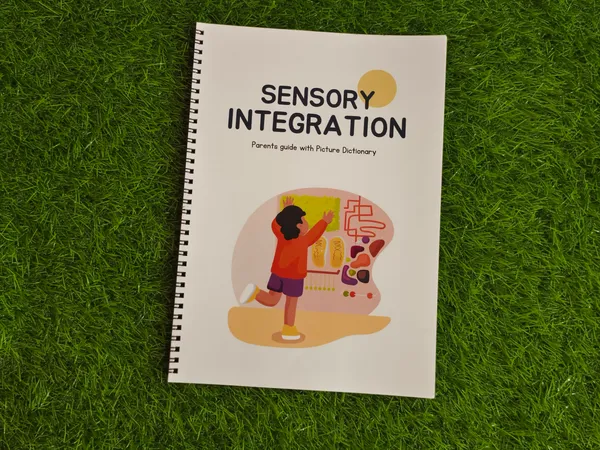
"Sensory Equilibrium" is a clinical-grade, 65-page master operations manual engineered specifically for home and clinic-based early intervention. This comprehensive curriculum translates complex sensory integration theory into clear, actionable daily routines. By charting the full spectrum of sensory reactivity across all 8 sensory systems, it equips families, therapists, and educators with a unified framework to decode behavior, build custom sensory diets, and foster deep neurological stability.
The 8-System Core Sensory Architecture:
This 65-page guide expands past the traditional five senses to map out the foundational systems that drive motor planning, posture, and internal emotional regulation:
• 1. Proprioception (The Body Awareness System) — Unpacking how muscles and joints communicate with the brain to control force, space, and physical grounding.
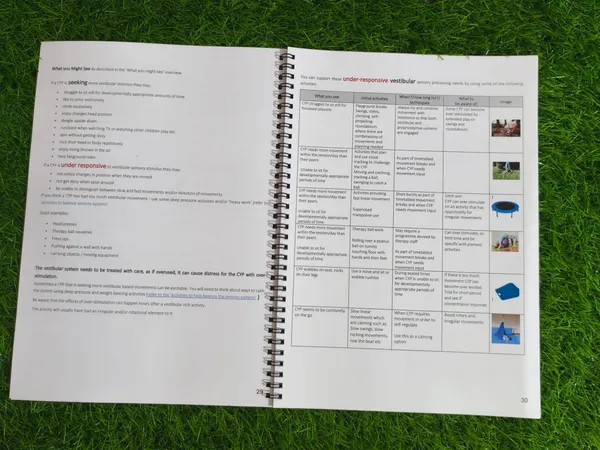
• 2. Vestibular (The Movement & Balance System) — Mapping out the inner ear receptors that track gravity, spatial orientation, head position, and bilateral coordination.
• 3. Interoception (The Internal Body Sense) — Demystifying the brain’s ability to read internal signals like heartbeat, hunger, thirst, pain, temperature, and bladder fullness.
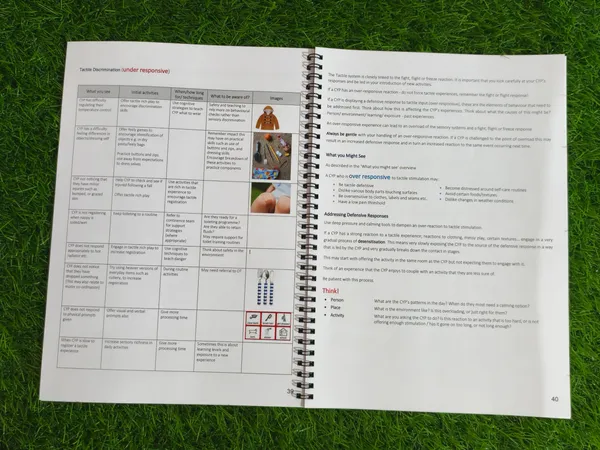
• 4. Tactile (The Touch System) — Managing the protective and discriminative skin pathways that process textures, temperatures, pain, and light touch.
• 5. Vision & Occulomotor — Unpacking visual processing, tracking, and environmental scanning boundaries.
• 6. Auditory Processing — Navigating acoustic filtration, frequency tolerances, and auditory loading limits.
• 7. Gustatory & Olfactory (Taste & Smell) — Addressing deep chemical sensitivities, scent tracking, and severe flavor/texture avoidance.
Inside the Sensory Modulation Blueprint:
Every sensory system in this manual is analyzed through a definitive clinical tracking matrix, showing you exactly how to identify, categorize, and address specific behavioral profiles:
• Under-Responsivity (Hypo-Reactivity / Sensory Seeking): For the child who seems "crave-driven"—seeking constant intense movement, crashing into walls, making loud noises, or showing an unusually high pain tolerance.
• Over-Responsivity (Hyper-Reactivity / Sensory Avoiding): For the child whose brain perceives everyday inputs as immediate threats—experiencing intense stress from clothing tags, food textures, unexpected touches, or standard room volumes.
• Balancing the Sensory System: The ultimate step-by-step instruction guide to creating a customized "Sensory Diet." It teaches you how to pair alerting inputs with calming, deep-pressure actions to maintain an optimal state of focus and alertness throughout the day.
Ready-to-Use Sensory Balancing Activities:
The manual contains an exhaustive library of structured, low-prep activities built around everyday household routines and play spaces:
• Heavy Work Protocols — Targeted proprioceptive tasks (like animal walks, pushing weighted boxes, and carrying laundry) to flood the nervous system with calming, organizing feedback.
• Vestibular Trajectory Drills — Structured linear, vertical, and rotary movement plans to carefully step up tolerance for motion and spatial shifts.
• Desensitization & Tactile Ladders — Step-by-step, low-arousal progressions to help children comfortably accept defensive touch textures, textures during meals, and personal care tasks.
Why Occupational Therapists, SLPs, & Clinics Rely on This Manual:
• The Ultimate Co-Treatment Companion — Speech and language acquisition are deeply intertwined with sensory processing. This guide allows multidisciplinary clinics to effortlessly integrate sensory regulation targets straight into communication IEP goals.
• Perfect for Home Program Carryover — The ideal, evidence-based manual to hand over to parents to ensure high-quality, high-frequency sensory strategies are being executed safely outside clinic walls.
• Structured, Zero-Prep Layout — No more searching through dense textbooks or printing temporary worksheets. Your entire sensory processing framework is indexed beautifully in a single volume.
Why Parents Love It:
• Dismantles Sensory Meltdowns Proactively — Rather than just managing a behavioral explosion after it starts, this book shows you how to recognize early biological cues and implement sensory buffers to keep your child regulated.
• Premium, Heavy-Duty Clinical Build — Comes in a clean, professional 65-page manual format. Printed on premium 100 GSM non-bleed paper with a robust, commercial-grade Wiro binding that allows each page to lay completely flat on a play mat or table, keeping your hands 100% free to engage with your child.
Product Specifications:
• Total Content: 65-Page Master Instructional Manual and Activity Workbook.
• Paper & Build Quality: Premium 100 GSM thick, smudge-resistant text paper with heavy-duty, flat-laying Wiro binding.
• Core Systems Covered: Proprioception, Interoception, Vestibular, Tactile, Vision, Hearing, Smell, and Taste.
• Analytical Frameworks: Sensory Modulation Tracking (Under-Responsivity, Over-Responsivity, Sensory Seeking, Sensory Avoiding) and Home-Based Activity Design.
• Best Suited For: Parents, Occupational Therapists (OTs), Speech-Language Pathologists (SLPs), and Special Educators supporting children navigating Sensory Processing Differences, Autism Spectrum Disorder (ASD), ADHD, Hyper-reactivity, Developmental Coordination Disorder (DCD), or Global Developmental Delays.
When a child overreacts to the texture of their clothing, covers their ears at everyday sounds, seeks intense spinning movements, or experiences sudden emotional breakdowns, the root cause often isn't behavioral—it's neurological. The brain is struggling to organize, filter, and accurately process information from the environment and inside the body. Without a structured, step-by-step roadmap, trying to support a child with sensory processing differences can feel like constant guesswork.
"Sensory Equilibrium" is a clinical-grade, 65-page master operations manual engineered specifically for home and clinic-based early intervention. This comprehensive curriculum translates complex sensory integration theory into clear, actionable daily routines. By charting the full spectrum of sensory reactivity across all 8 sensory systems, it equips families, therapists, and educators with a unified framework to decode behavior, build custom sensory diets, and foster deep neurological stability.
The 8-System Core Sensory Architecture:
This 65-page guide expands past the traditional five senses to map out the foundational systems that drive motor planning, posture, and internal emotional regulation:
• 1. Proprioception (The Body Awareness System) — Unpacking how muscles and joints communicate with the brain to control force, space, and physical grounding.
• 2. Vestibular (The Movement & Balance System) — Mapping out the inner ear receptors that track gravity, spatial orientation, head position, and bilateral coordination.
• 3. Interoception (The Internal Body Sense) — Demystifying the brain’s ability to read internal signals like heartbeat, hunger, thirst, pain, temperature, and bladder fullness.
• 4. Tactile (The Touch System) — Managing the protective and discriminative skin pathways that process textures, temperatures, pain, and light touch.
• 5. Vision & Occulomotor — Unpacking visual processing, tracking, and environmental scanning boundaries.
• 6. Auditory Processing — Navigating acoustic filtration, frequency tolerances, and auditory loading limits.
• 7. Gustatory & Olfactory (Taste & Smell) — Addressing deep chemical sensitivities, scent tracking, and severe flavor/texture avoidance.
Inside the Sensory Modulation Blueprint:
Every sensory system in this manual is analyzed through a definitive clinical tracking matrix, showing you exactly how to identify, categorize, and address specific behavioral profiles:
• Under-Responsivity (Hypo-Reactivity / Sensory Seeking): For the child who seems "crave-driven"—seeking constant intense movement, crashing into walls, making loud noises, or showing an unusually high pain tolerance.
• Over-Responsivity (Hyper-Reactivity / Sensory Avoiding): For the child whose brain perceives everyday inputs as immediate threats—experiencing intense stress from clothing tags, food textures, unexpected touches, or standard room volumes.
• Balancing the Sensory System: The ultimate step-by-step instruction guide to creating a customized "Sensory Diet." It teaches you how to pair alerting inputs with calming, deep-pressure actions to maintain an optimal state of focus and alertness throughout the day.
Ready-to-Use Sensory Balancing Activities:
The manual contains an exhaustive library of structured, low-prep activities built around everyday household routines and play spaces:
• Heavy Work Protocols — Targeted proprioceptive tasks (like animal walks, pushing weighted boxes, and carrying laundry) to flood the nervous system with calming, organizing feedback.
• Vestibular Trajectory Drills — Structured linear, vertical, and rotary movement plans to carefully step up tolerance for motion and spatial shifts.
• Desensitization & Tactile Ladders — Step-by-step, low-arousal progressions to help children comfortably accept defensive touch textures, textures during meals, and personal care tasks.
Why Occupational Therapists, SLPs, & Clinics Rely on This Manual:
• The Ultimate Co-Treatment Companion — Speech and language acquisition are deeply intertwined with sensory processing. This guide allows multidisciplinary clinics to effortlessly integrate sensory regulation targets straight into communication IEP goals.
• Perfect for Home Program Carryover — The ideal, evidence-based manual to hand over to parents to ensure high-quality, high-frequency sensory strategies are being executed safely outside clinic walls.
• Structured, Zero-Prep Layout — No more searching through dense textbooks or printing temporary worksheets. Your entire sensory processing framework is indexed beautifully in a single volume.
Why Parents Love It:
• Dismantles Sensory Meltdowns Proactively — Rather than just managing a behavioral explosion after it starts, this book shows you how to recognize early biological cues and implement sensory buffers to keep your child regulated.
• Premium, Heavy-Duty Clinical Build — Comes in a clean, professional 65-page manual format. Printed on premium 100 GSM non-bleed paper with a robust, commercial-grade Wiro binding that allows each page to lay completely flat on a play mat or table, keeping your hands 100% free to engage with your child.
Product Specifications:
• Total Content: 65-Page Master Instructional Manual and Activity Workbook.
• Paper & Build Quality: Premium 100 GSM thick, smudge-resistant text paper with heavy-duty, flat-laying Wiro binding.
• Core Systems Covered: Proprioception, Interoception, Vestibular, Tactile, Vision, Hearing, Smell, and Taste.
• Analytical Frameworks: Sensory Modulation Tracking (Under-Responsivity, Over-Responsivity, Sensory Seeking, Sensory Avoiding) and Home-Based Activity Design.
• Best Suited For: Parents, Occupational Therapists (OTs), Speech-Language Pathologists (SLPs), and Special Educators supporting children navigating Sensory Processing Differences, Autism Spectrum Disorder (ASD), ADHD, Hyper-reactivity, Developmental Coordination Disorder (DCD), or Global Developmental Delays.